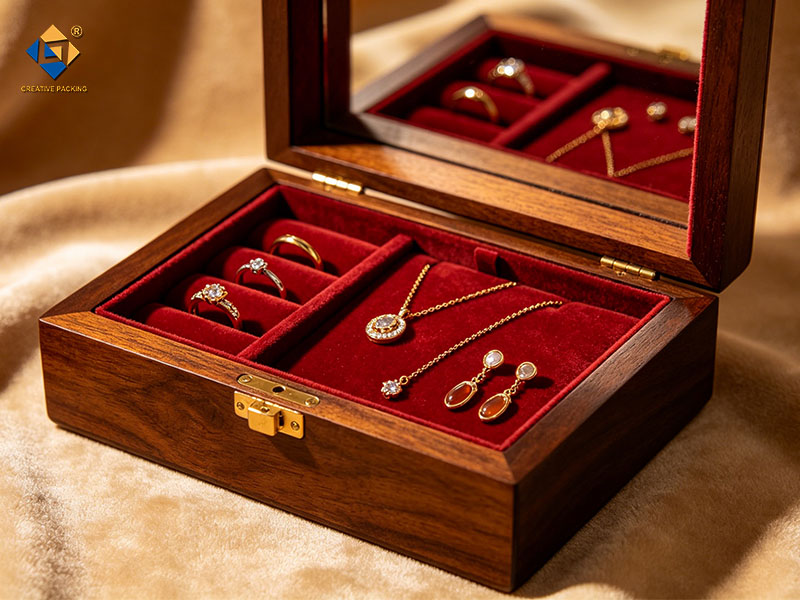
Most people think a jewelry box is just a container for rings, necklaces, or earrings.
In reality, in the luxury industry, a jewelry box is part of the sales system, not just packaging.
For high-end brands, the box performs three hidden functions:
- It increases perceived product value
- It strengthens emotional purchase decisions
- It reduces return rate by improving perceived quality
In other words, a jewelry box is not what holds the product.
It is what justifies the price of the product in the buyer’s mind.
This is why luxury jewelry brands invest heavily in packaging design before scaling production.
Why Jewelry Packaging Has More Influence Than Advertising in Some Cases
In e-commerce and luxury retail, advertising brings traffic — but packaging closes perception.
When a customer receives a jewelry product, the psychological process is:
- Expectation (created by ads)
- Reality (created by packaging)
- Validation (product + packaging consistency)
If packaging feels cheap, even a high-quality product loses perceived value.
If packaging feels premium, even a mid-range product feels luxury.
This is why brands often say:
“We don’t sell jewelry first. We sell the experience of opening it.”
Jewelry boxes are the first physical brand interaction.
The Three Emotional Signals a Jewelry Box Must Deliver
A high-quality jewelry box is not judged consciously — it is judged emotionally in seconds.
There are three core emotional signals:
1. Security (Protection Psychology)
Customers must feel the jewelry is safe.
This is created by:
- Soft velvet interior
- Tight-fit compartments
- Stable structure design
If the product moves inside the box, perceived value drops immediately.
2. Exclusivity (Luxury Signal)
Luxury is not about price — it is about uniqueness.
Jewelry boxes achieve this through:
- Custom color palettes
- Embossed logos
- Material grain variations (wood/leather texture)
No two luxury boxes should feel identical.
3. Ceremony (Unboxing Experience)
The opening process is more important than the box itself.
Luxury brands design:
- Magnetic slow-close lids
- Layered opening sequences
- Soft resistance hinges
This creates a “ritual effect,” increasing emotional satisfaction.
Material Selection Defines Brand Positioning More Than Design
Jewelry boxes are usually made from four major material systems:
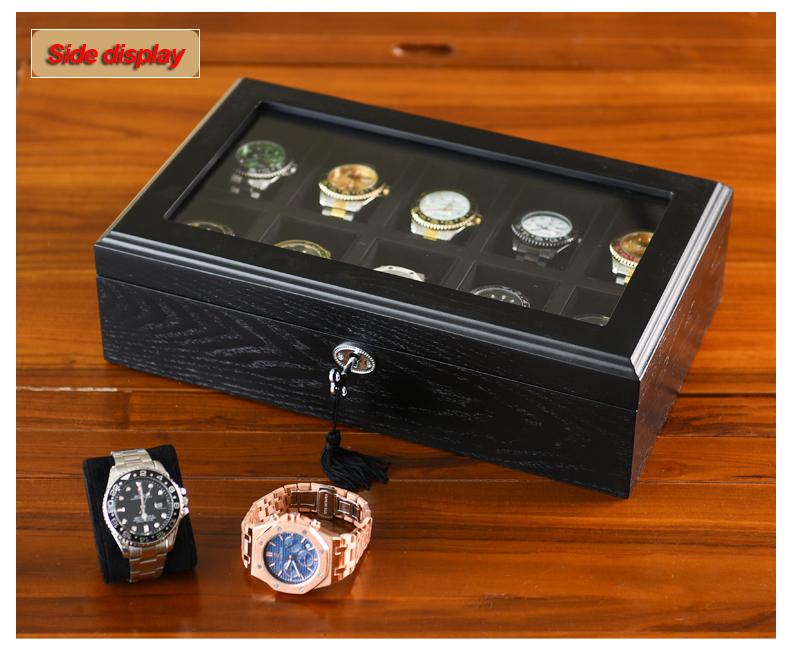
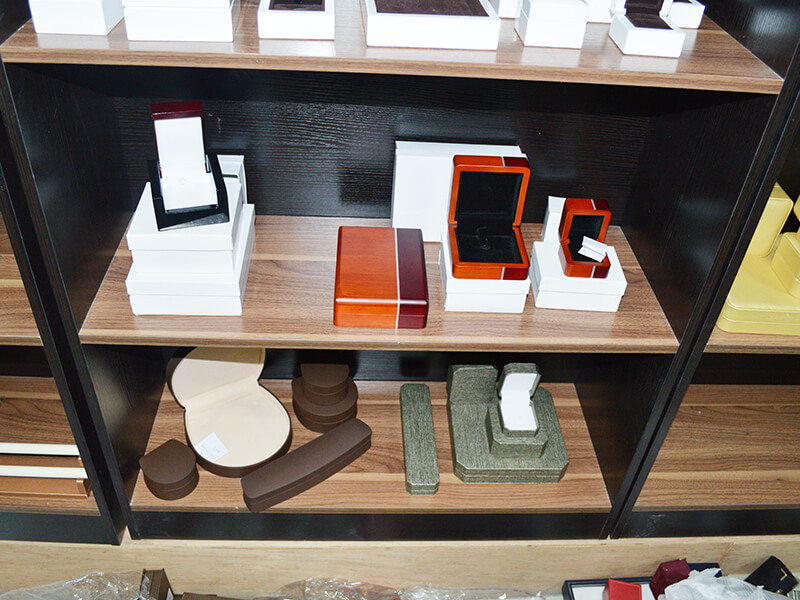
Wood (Premium Heritage Positioning)
Wood communicates:
- Tradition
- Stability
- High-end craftsmanship
Used by:
- Luxury jewelry brands
- Gift brands
- Heritage collections
Best for brands wanting “timeless luxury” positioning.
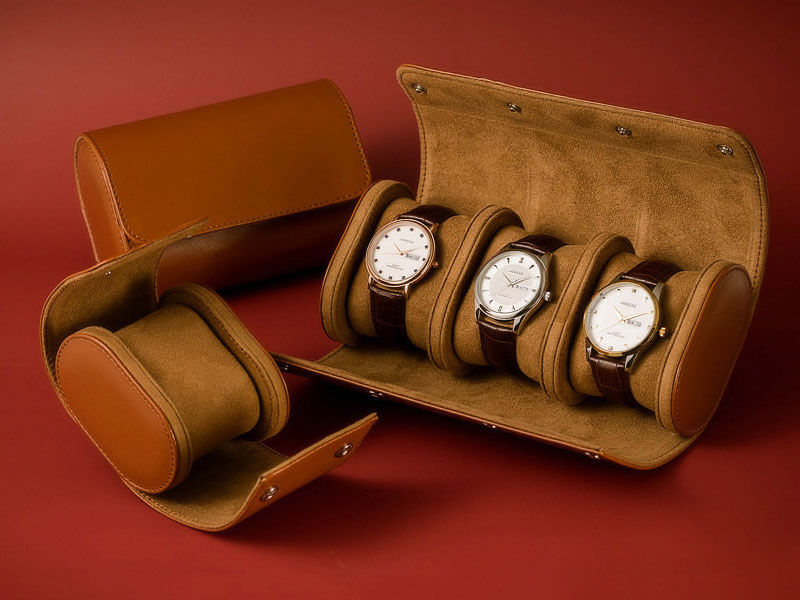
Leather (Modern Luxury Positioning)
Leather communicates:
- Fashion
- Soft luxury
- Contemporary elegance
Used by:
- Fashion jewelry brands
- Boutique brands
- Retail chains
Best for brands targeting younger luxury consumers.
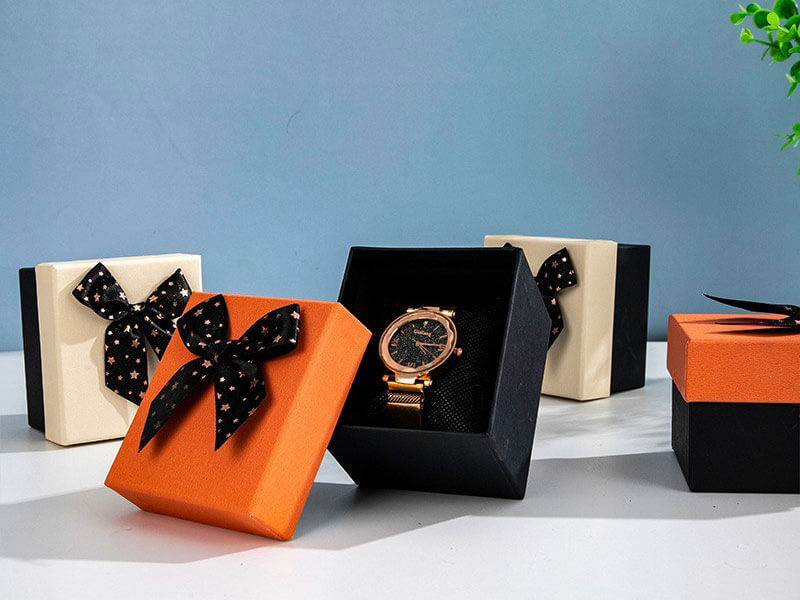
Paper (Entry Luxury / Mass Retail)
Paper communicates:
- Accessibility
- Clean branding
- Cost efficiency
Used by:
- E-commerce jewelry brands
- Seasonal collections
- Promotional packaging
Best for scaling volume.
Plastic / Acrylic (Functional Display Use)
Plastic communicates:
- Functionality
- Transparency
- Practicality
Used by:
- Retail display packaging
- Budget jewelry lines
Best for visibility and logistics efficiency.
Why Interior Design Is More Important Than Exterior Design
Many brands focus on logo placement and outer appearance.
However, in jewelry packaging, the interior determines product perception accuracy.
Critical interior engineering elements include:
Cushion Density
If too soft → jewelry sinks
If too hard → scratches risk increases
Material Friction Control
Velvet, suede, and microfiber all behave differently
Compartment Geometry
Incorrect spacing reduces perceived precision
A well-designed interior makes the product feel “expensive before it is seen clearly.”
How Jewelry Boxes Directly Affect Conversion Rate (E-commerce Insight)
In online jewelry sales, packaging impacts:
- Return rate
- Review ratings
- Unboxing shareability
- Repeat purchase behavior
Brands often observe:
Premium packaging → higher perceived value → lower return rate
Even when product quality is identical.
This is because customers subconsciously associate packaging quality with product authenticity.
OEM Jewelry Box Manufacturing: What Brands Actually Customize
Professional brands rarely buy standard boxes.
Instead, they customize:
Structural Customization
- Drawer style boxes
- Hinged lid boxes
- Magnetic closure systems
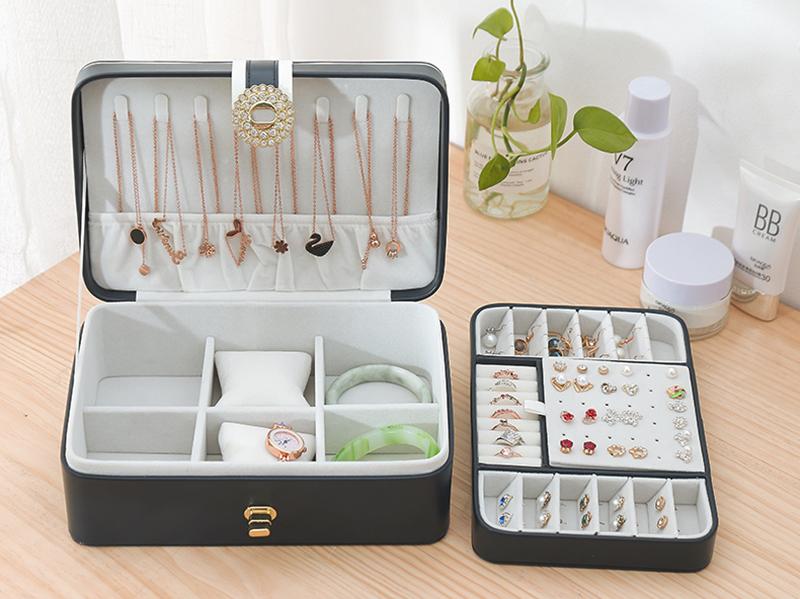
- Multi-layer jewelry storage
Branding Customization
- Hot stamping (gold/silver)
- Embossed logos
- Metal logo plates
- UV printing systems
Interior Customization
- Ring slots
- Necklace hooks
- Earring panels
- Adjustable compartments
Color System Customization
Luxury brands often use:
- Brand-matched Pantone colors
- Seasonal packaging editions
- Limited edition packaging series
The Hidden Manufacturing Difference Between Cheap and Luxury Jewelry Boxes
Most buyers cannot visually distinguish quality differences.
But manufacturers know the real gap is in:
1. Assembly precision
Misaligned lids immediately downgrade luxury perception.
2. Material layering
Cheap boxes use single-layer MDF; premium boxes use multi-layer composites.
3. Surface treatment
Coating thickness determines scratch resistance and longevity.
4. Hardware quality
Hinges and magnetic closures are failure points in low-end boxes.
How Global Jewelry Brands Use Packaging as a Marketing Asset
Luxury brands do not treat packaging as cost — they treat it as marketing leverage.
Jewelry boxes are used to:
1. Increase perceived product tier
Same product + better box = higher price acceptance
2. Strengthen brand identity
Packaging becomes recognizable brand signature
3. Encourage social sharing
Unboxing videos are driven by visual packaging quality
4. Build gift economy value
Better packaging increases gift suitability
Final Insight: Jewelry Packaging Is a Silent Salesperson
A jewelry box does not speak.
But it decides how the customer feels before they see the product.
In luxury retail, the customer rarely remembers technical details.
They remember:
- How it felt to open
- How it looked when first revealed
- How “expensive” it felt before they even touched it
That moment determines whether the product is perceived as:
“jewelry”or“luxury jewelry”




 Release time:

 WhatsApp: