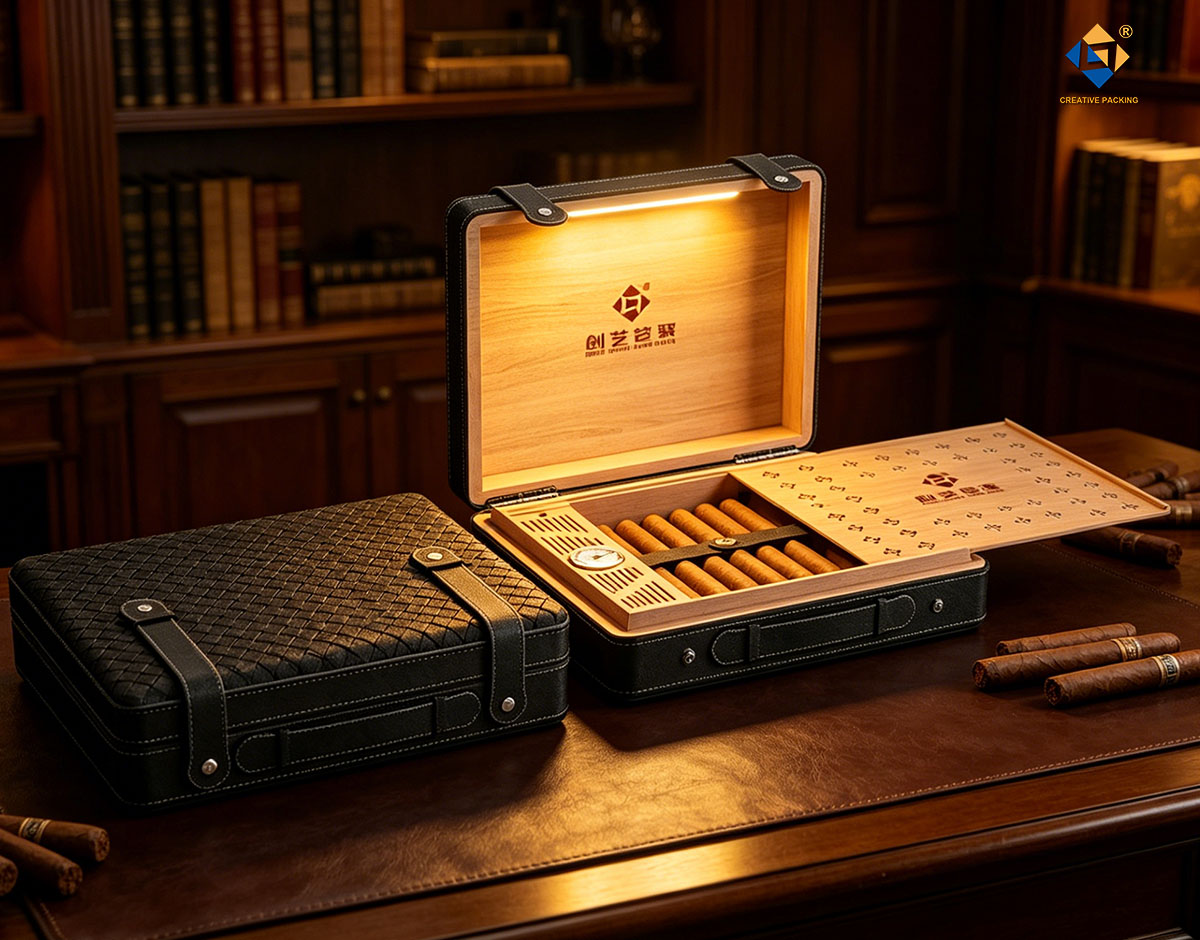
Beyond Storage — The Cultural and Commercial Significance of Cigar Boxes
In the world of premium cigars, the product itself is only part of the story.
Cigars are deeply tied to heritage, craftsmanship, and ritual. From selection to storage, every detail contributes to the overall experience. Among these elements, the cigar box plays a uniquely critical role.
It is not merely a container.
It is a protector of quality, a carrier of brand identity, and a silent ambassador that communicates value before the cigar is even touched.
For brands operating in competitive and high-margin markets, investing in high-quality cigar boxes is not optional—it is strategic.
1. Preservation First: The Functional Foundation of Cigar Boxes
Unlike many consumer goods, cigars are highly sensitive to environmental conditions.
Humidity, temperature, and airflow directly affect:
- Flavor integrity
- Burn consistency
- Aging potential
A well-designed cigar box must therefore meet strict functional standards:
Humidity Regulation Compatibility
While not always a full humidor, premium cigar boxes must support stable internal conditions or integrate with humidity control systems.
Material Selection
Traditional cedar wood—especially Spanish cedar—is widely preferred for its:
- Natural moisture regulation
- Resistance to pests
- Aromatic enhancement of cigars
Structural Integrity
Boxes must withstand international shipping, long-term storage, and retail handling without compromising internal conditions.
In short, a cigar box is part of the product ecosystem—not just packaging.
2. Packaging as Heritage: The Emotional Power of Presentation
Cigar consumption is inherently emotional and ritualistic.
From opening the box to selecting a cigar, the experience is designed to evoke:
- Prestige
- Relaxation
- Tradition
A premium cigar box enhances this experience through:
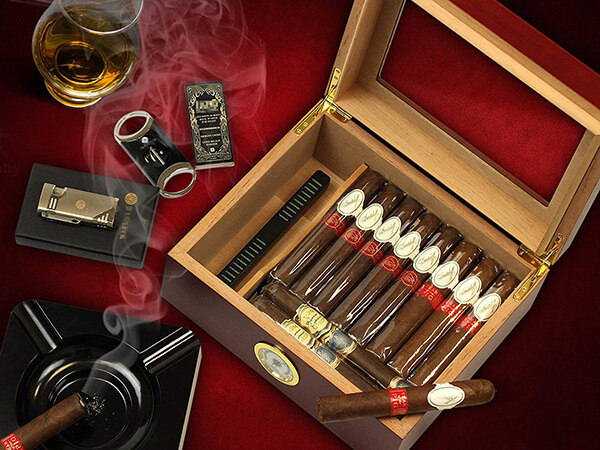
- Craftsmanship details (hinges, finishes, engraving)
- Visual storytelling (logos, artwork, heritage cues)
- Tactile satisfaction (weight, texture, opening feel)
For many consumers, the moment of opening a cigar box is comparable to unboxing a luxury watch or fine whiskey.
This is where packaging transitions from functional to experiential branding.
3. Brand Identity and Market Positioning
In global cigar markets, especially in regions such as the Middle East, Europe, and Russia, visual differentiation is critical.
A cigar box often serves as the primary branding surface, especially in retail environments where:
- Products are displayed in cabinets
- Customers make decisions visually
- Brand recognition drives repeat purchases
Key branding elements include:
- Embossed or hot-stamped logos
- Gold foil accents
- Vintage or heritage-inspired typography
- Custom color palettes aligned with brand identity
For emerging brands, a well-designed cigar box can instantly elevate perceived credibility, bridging the gap between new entrants and established names.
4. Customization as a Competitive Advantage
Standard packaging limits brand growth.
Customization enables businesses to:
- Differentiate in saturated markets
- Target specific customer segments
- Adapt to regional preferences
Common Cigar boxes OEM/ODM customization options include:
- Box size and cigar count configurations
- Wood types and finishes (matte, gloss, lacquer)
- Internal layout and separators
- Branding techniques (engraving, metal plates, printing)
- Outer packaging for retail or gifting
For B2B buyers, especially distributors and private label brands, customization is not just aesthetic—it is a tool for market positioning and pricing strategy.
5. The Role of Cigar Boxes in Gifting and High-End Retail
Cigars are frequently associated with gifting occasions:
- Corporate gifts
- Celebrations
- VIP events
In these contexts, the cigar box often carries as much importance as the cigars themselves.
A premium box:
- Enhances perceived gift value
- Eliminates the need for additional packaging
- Strengthens brand recall long after consumption
In luxury retail, packaging also influences:
- Shelf appeal
- Customer interaction time
- Purchase conversion rates
This makes cigar boxes a direct contributor to sales performance, not just a supporting element.
6. Manufacturing Considerations: From Craftsmanship to Scalability
For brands sourcing cigar boxes internationally, choosing the right manufacturing partner is critical.
Key considerations include:
Material Expertise
Understanding wood behavior, humidity interaction, and finishing techniques.
Quality Control Systems
Ensuring consistency across batches—especially important for global distribution.
Production Flexibility
Supporting both low MOQ for new brands and large-scale orders for established distributors.
Export Experience
Compliance with international packaging standards and logistics requirements.
A capable manufacturer bridges the gap between
7. Sustainability and Modern Market Expectations
As global awareness of sustainability increases, packaging choices are under greater scrutiny.
Cigar brands are increasingly expected to consider:
- Responsibly sourced wood materials
- Eco-friendly finishes and coatings
- Minimalist or recyclable outer packaging
Balancing luxury with sustainability is becoming a key differentiator, particularly in Western markets.
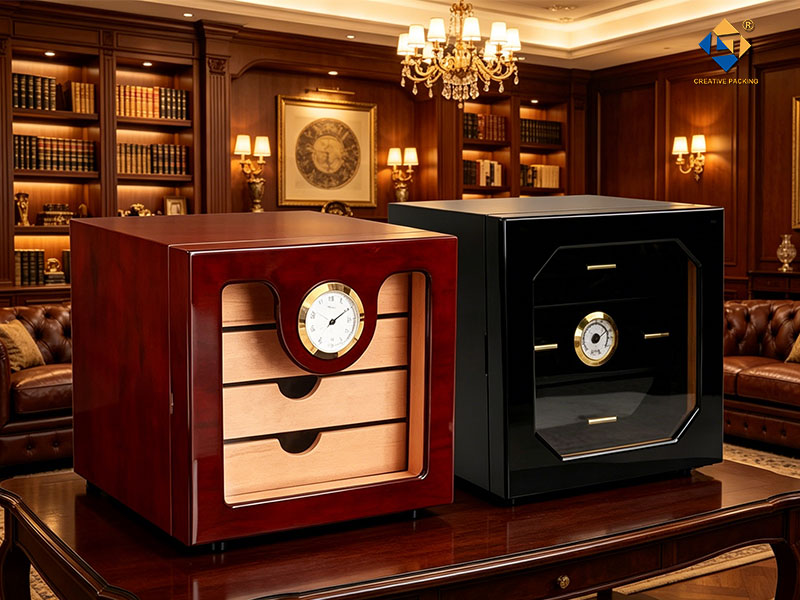
Image source: Creativepacking
Conclusion: Packaging as a Strategic Investment in the Cigar Industry
In the premium cigar industry, the box is not secondary—it is integral.
A well-designed cigar box:
- Protects product quality
- Enhances user experience
- Communicates brand value
- Drives purchasing decisions
For businesses aiming to build or expand a cigar brand, packaging should be viewed not as a cost center, but as a strategic investment in brand equity and market success.







 Release time:

 WhatsApp: