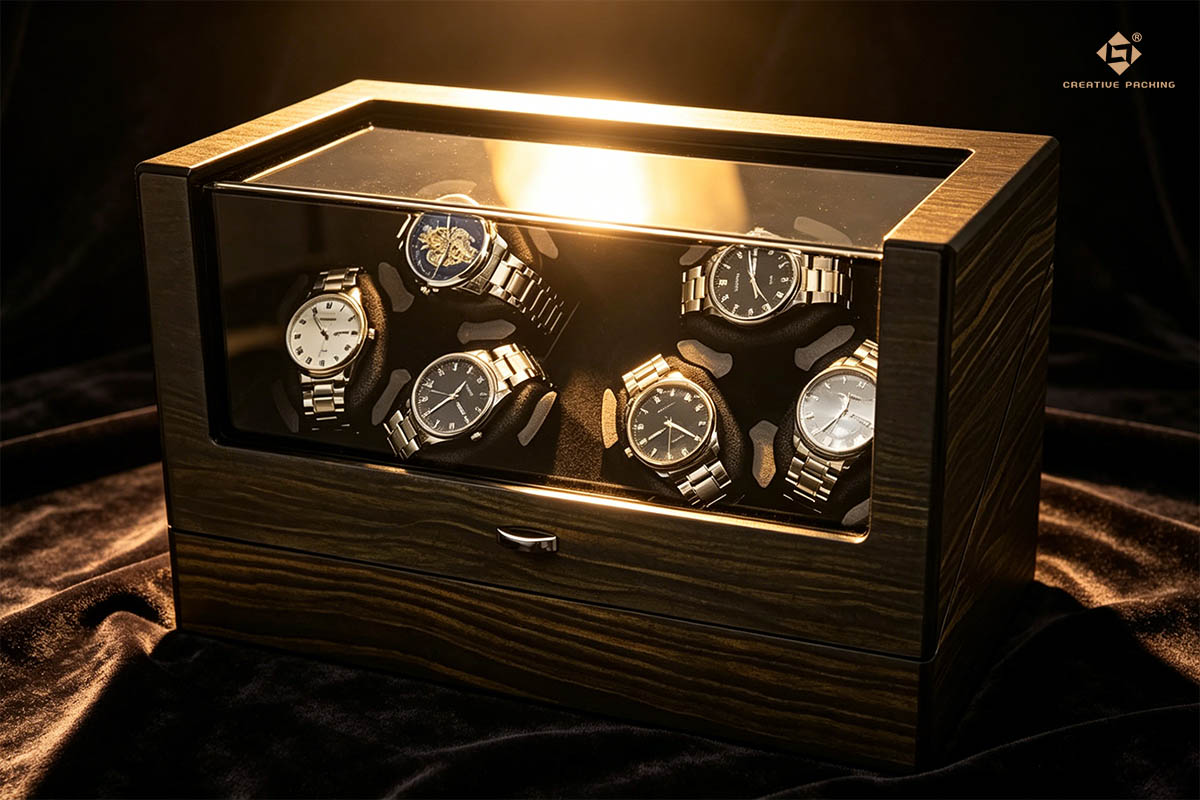
Automatic watches depend on movement to stay running. Unlike quartz watches, which use a battery, automatic watches rely on a mechanical system that converts wrist motion into stored energy. When worn regularly, they remain wound. When left unused, they slowly stop.
A watch winder solves this problem by keeping an automatic watch in motion when it is not being worn. For collectors, retailers, and luxury brands, understanding how a watch winder works is important for both product selection and market positioning.
How automatic watches stay powered
To understand how a watch winder works, it helps to first understand the structure of an automatic watch. Inside the watch is a rotor, a semi-circular component that moves as the wrist moves. This motion winds the mainspring, which stores energy and powers the movement.
When the watch is not worn, the rotor stops moving. The mainspring gradually unwinds, the power reserve decreases, and the watch eventually stops. This is normal behavior, but restarting the watch can be inconvenient, especially for models with date, moon phase, or perpetual calendar functions.
A watch winder is designed to replicate natural wrist movement. It rotates the watch at controlled intervals to keep the mainspring wound and maintain the power reserve. It also helps prevent lubricants inside the movement from settling during long periods of inactivity.
A quality watch winder does not spin constantly. Instead, it works in cycles, alternating between rotation and rest. This controlled motion helps simulate regular wear without creating unnecessary stress on the watch.
Rotation settings and TPD
One of the most important features of a watch winder is its rotation program. Different watches need different levels of movement, which are usually measured in TPD, or turns per day.
Common settings include:
-
650 TPD for light winding.
-
900 to 1200 TPD for standard use.
-
1500+ TPD for watches that require more frequent motion.
Rotation direction also matters. Some watches need clockwise rotation, some need counterclockwise rotation, and others require bi-directional movement. A good watch winder should offer adjustable settings so it can work with different automatic watch brands and models.
Why the motor matters
The motor is the core of any watch winder. Premium watch winders usually use Japanese or German motors because they are known for quiet operation and stable performance. This is especially important for home use, where noise can be a concern in bedrooms, studies, or offices.
A low-quality motor may create noise, uneven rotation, or unnecessary mechanical stress. For brands and distributors, motor quality affects product reliability, customer satisfaction, and long-term reputation.
The outer structure of a watch winder is also important. Wooden watch winders are widely preferred in premium markets because they offer better durability, reduced vibration, and a more luxurious appearance.
Wood also allows for a variety of finishes, including piano lacquer, walnut grain, and matte textures. This makes a wooden watch winder not only a functional tool but also a display piece that matches the value of luxury timepieces.
Can a watch winder overwind a watch?
A common concern is whether a watch winder can overwind an automatic watch. In most modern watches, the answer is no. Automatic movements are designed with a slipping clutch mechanism, which prevents damage once the mainspring is fully wound.
That said, continuous motion is unnecessary. This is why quality watch winders use programmed cycles rather than constant spinning. This approach supports efficient winding, reduces wear, and helps extend the life of the watch.
Watch winders are especially useful for:
-
Collectors with multiple automatic watches.
-
Owners of watches with complex functions.
-
Retailers displaying running timepieces.
-
Luxury brands building a complete watch accessory line.
For occasional users, a watch winder is mainly about convenience. For collectors and professionals, it becomes a practical part of watch care and presentation.
A product with commercial value
Beyond its technical function, a watch winder is also a strong product category for brands. It carries high perceived value, supports premium pricing, and fits naturally into luxury positioning.
Custom watch winders can be developed with brand logos, matching materials, and premium packaging. This gives brands a way to expand their product offering without developing new watch technology.
At Dongguan Creative Packing , we support luxury packaging and display products for international brands that want OEM and ODM solutions from China. If you are looking for a reliable wooden watch winder manufacturer that understands premium presentation and market needs, our team can help you build the right solution.
Related reading:




 Release time:Why Watch Winders Exist

 WhatsApp: