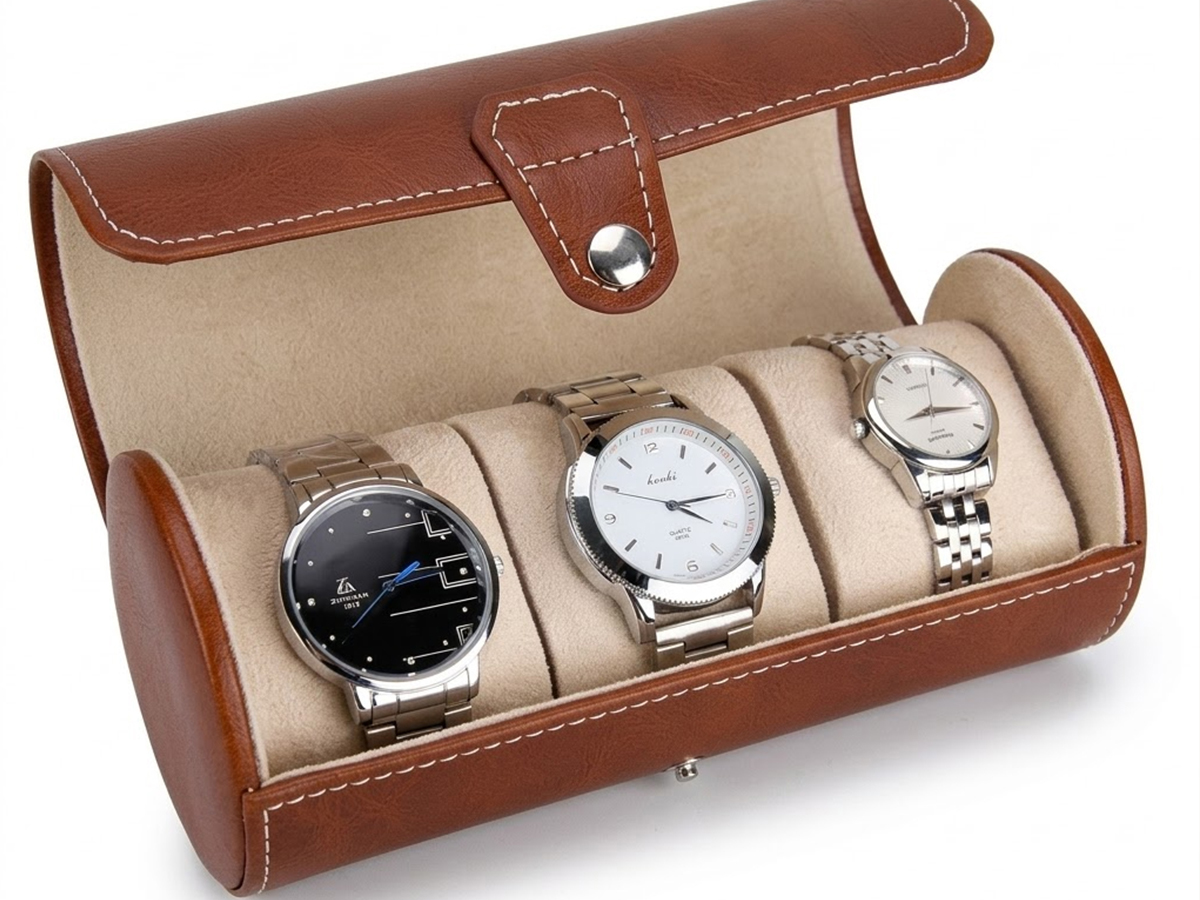
Ask most watch box suppliers how pillow size is determined and the answer is almost always "case diameter." That's the measurement everyone defaults to, and it's also the reason so many finished watch boxes end up with watches that sit slightly crooked, bracelets that bow upward at the center links, or pillows that fit smaller pieces but leave nothing in reserve for a brand's larger models.
The measurement that actually determines fit is lug-to-lug — the straight-line distance from the top of one lug to the bottom of the opposite lug. This is what determines how much of the pillow's circumference a watch actually occupies once it's strapped on, and it's routinely left off spec sheets in favor of the simpler, less accurate case diameter number.
Why Lug-to-Lug Matters More Than Case Diameter
A 36mm vintage dress watch can have a lug-to-lug measurement of 43mm. A modern 42mm sports watch can stretch past 51mm lug-to-lug once the lugs and bracelet taper are factored in. Two watches with a 6mm difference in case diameter can need pillows built for an 8-9mm difference in actual footprint. For a brand ordering boxes across several watch models, sizing pillows off case diameter alone means some models fit cleanly and others don't — usually discovered only after the full production run arrives.
Thickness matters too, and it's often measured incorrectly. The correct reference point is from the case back to the highest point of the crystal — or to the top of the bezel if the watch has a raised rotating bezel. Boxes built to a shallow, generic depth spec frequently can't close properly over thicker dive or chronograph pieces.
The Pillow Failures That Show Up After Production, Not Before
- Pillows too soft to hold a watch upright. Underfilled or low-density foam cores let a watch tilt or lean rather than sitting level, which looks unfinished even in an otherwise well-built box.
- Slots too tight for bracelet width. If the center links of a metal bracelet bow upward inside the slot, the width was cut for the wrong measurement — this stresses the bracelet clasp over repeated use and is a common cause of warranty complaints that trace back to the packaging, not the watch.
- No allowance for larger pieces in a mixed collection. A single fixed pillow diameter works until a brand introduces a larger model into the same box line, at which point the whole tooling needs to be revisited.
- Lug-to-lug range across your model lineup, not just case diameter — if your collection spans multiple sizes, say so upfront rather than sizing pillows to your best-selling model only.
- Case thickness measured to the highest point (crystal or raised bezel), so the box depth and lid clearance are correct on the first sample.
- Bracelet or strap width, especially for metal bracelet models, to avoid the bowing issue described above.
- Whether pillows need to be removable or adjustable — a removable felt-lined core lets one box accommodate a wider size range without redesigning the interior for every SKU.
- Static display vs. movement-friendly storage — a standard pillow box is fine for quartz or manually wound pieces kept unworn for short periods, but automatic movements intended to stay wound need a winder-compatible interior rather than a fixed foam pillow.
Conclusion
A watch box that photographs well on a sample table and one that fits correctly across a brand's full model range aren't guaranteed to be the same product — the difference comes down to which measurement the pillow was actually built around. Creative Packing works from a brand's real model specifications, not a generic case-diameter chart, when engineering custom watch boxes.
Read more:





 Release time:

 WhatsApp: