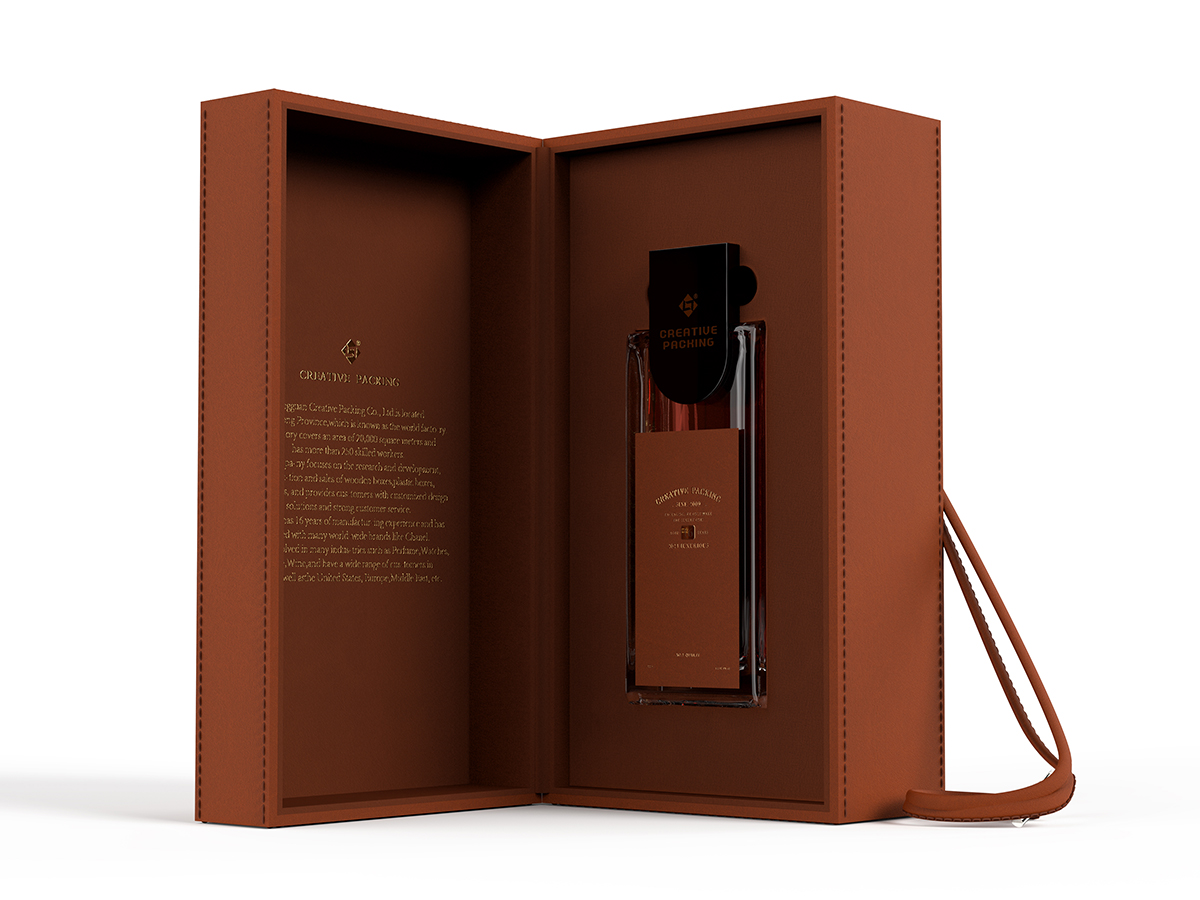
Why Most Fragrance Brands Think About the Box Too Late
Most fragrance brands don’t seriously consider their box until the bottle design is basically locked. That’s usually a mistake.
By the time you’re choosing packaging, you’ve already spent months on the juice, the bottle mold, and the brand name — and the box gets treated like a line item instead of the thing that actually sits in a customer’s hands before they ever smell anything.
At Creative Packing, we’ve been making rigid packaging — perfume, jewelry, cigar, watch, and wine boxes — for 19 years, primarily for brands selling into the Middle East and Western markets. perfume boxes are one of the trickier categories we work on, not because the printing is hard, but because the tolerances matter more than people expect. A bottle that rattles even half a millimeter inside a poorly cut foam insert will chip during air freight. It happens more often than you’d think.
The Box Structures That Actually Get Used
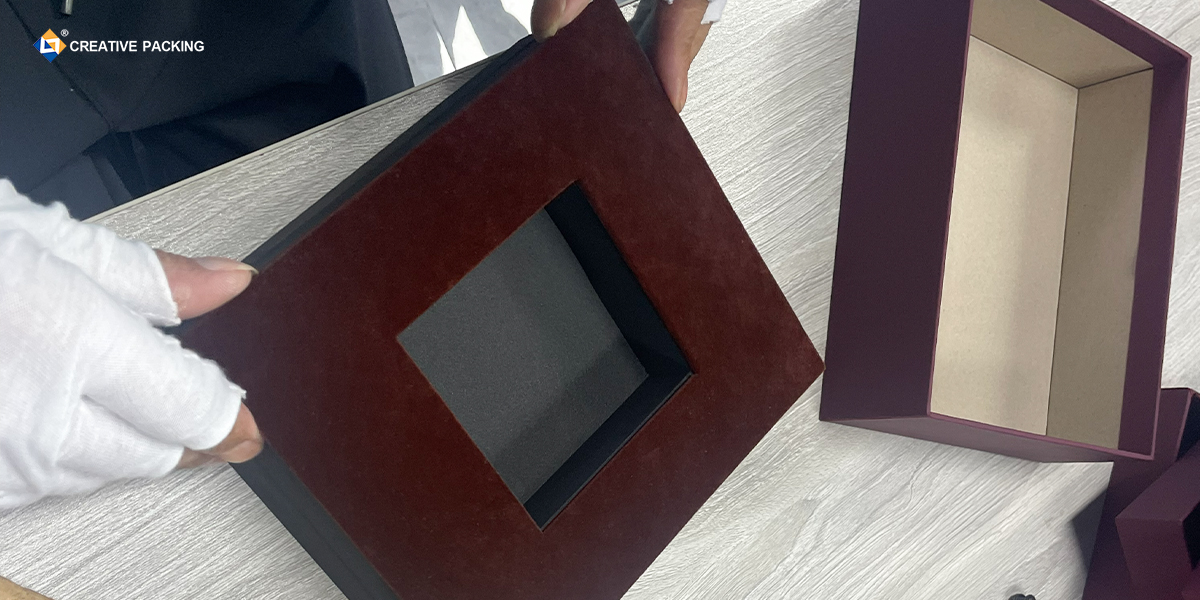
There’s no shortage of fancy structural ideas in packaging design decks, but in practice, most fragrance brands land on one of a handful of formats:
- Rigid two-piece boxes with a magnetic lid The default for anything positioned as premium or niche. The magnet does a lot of psychological work — it’s the click that tells someone this cost more than a drugstore fragrance. We cut a lot of these at Creative Packing.
- Drawer-style boxes The base slides out of an outer sleeve. These show up more in gift sets and limited runs. They photograph and film well for unboxing content — something that matters more now than it did five years ago. A decent portion of our clients specifically ask for a structure that “looks good on video.”
- Telescoping lid-and-base boxes The older, more economical cousin of the magnetic version. Still rigid, still premium-feeling, just without the magnet mechanism. A solid option when a brand wants the weight and feel of rigid packaging without the added cost.
- Foldable rigid format Flat-packed and assembled on arrival. Mostly requested by brands trying to keep freight costs down on larger orders. It’s a reasonable compromise when volume is high enough that air shipping becomes expensive.
Materials — Where Brands Usually Overspend or Underspend
- FSC-certified board Close to non-negotiable if you’re selling into Europe. It used to be a nice-to-have; retail buyers now ask about it directly during due diligence before placing a wholesale order.
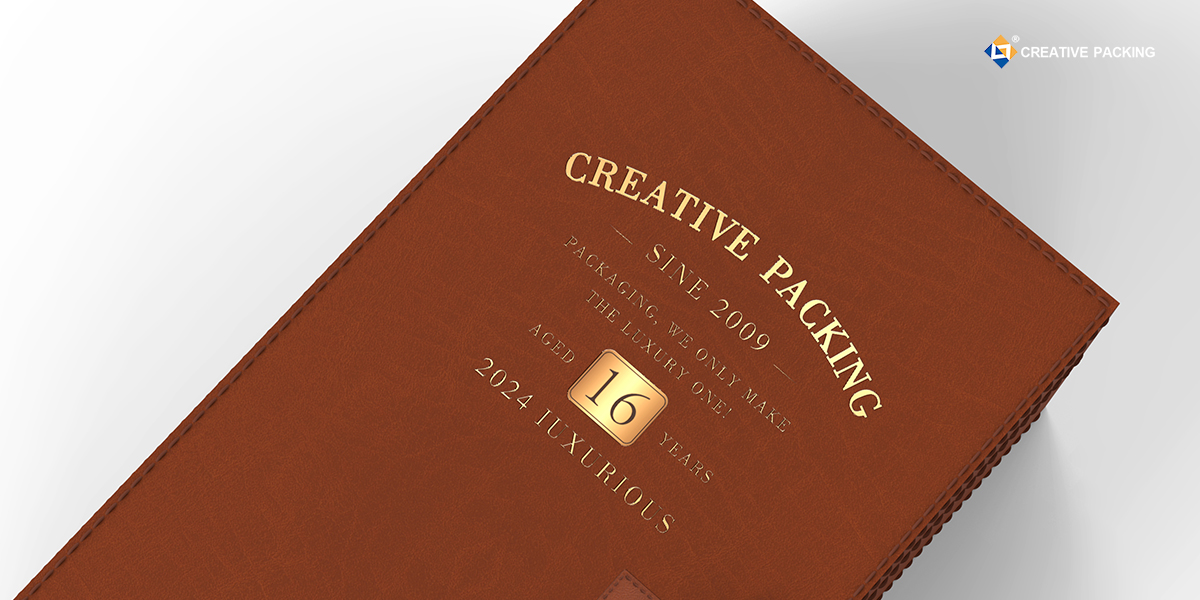
- Foil stamping Where most of the visual “expensive” cue comes from — gold, rose gold, holographic, whatever fits the brand. Paired with debossing, it reads as premium almost regardless of what the paper underneath actually costs. This is honestly where a lot of newer brands should be putting more of their budget rather than on the printing itself.
- Soft-touch lamination Almost a default request in the last couple of years, especially from niche fragrance brands. It feels good in the hand, but it also scuffs and shows fingerprints more than a matte varnish. We tell clients this upfront because it’s a real trade-off, not just an upgrade.
What the Production Process Actually Looks Like
It starts with the bottle, not the box.
We need real dimensions — not approximate ones — before we can build a die-line that closes properly and holds the bottle without excess play. Brands sometimes send bottle renders instead of a physical sample or accurate CAD, and that’s usually where the first round of sample revisions comes from.
After the die-line is confirmed, we make a physical sample using the actual specified materials — not a mockup on generic stock. Color matching against Pantone happens here too. This is genuinely the step where things most often go sideways between sample approval and bulk production if it’s rushed.
Once the sample is approved, the sequence is: printing → finishing (foil, embossing, lamination, etc.) → assembly and insert fitting → inspection.
For a mid-size order, sampling usually takes one to two weeks depending on how many finishing techniques are stacked. Bulk lead time depends on order size and whether the specified paper stock is something we hold or need to source.
Why the Market Is Paying More Attention to Packaging Right Now
The global fragrance packaging market is on track to grow from around USD 3.83 billion in 2025 to roughly USD 6.2 billion by 2034, driven by rising demand for premium, visually distinctive packaging in personal care and cosmetics. Part of that growth is straightforward premiumization — more people buying niche fragrance as a self-purchase rather than just a gift. There’s also a sustainability piece that’s harder to ignore, especially with EU packaging waste regulations pushing brands toward refillable and lighter-weight formats, alongside the expansion of digital beauty retail.
For a brand sourcing packaging right now, that translates into buyers on the retail and distribution side actually asking for FSC documentation, not just accepting a claim on a spec sheet.
Why Brands Source This from China — Specifically from Creative Packing
It’s not really a mystery. It comes down to having foil stamping, embossing, lamination, and rigid box construction available under one factory roof instead of routing a box through three different subcontractors and hoping the timing lines up. That coordination risk is where a lot of packaging projects actually fall apart — not in the design phase.
MOQs are also more workable here for finishes that would carry steep minimums elsewhere. A foil-stamped magnetic box in a mid-size run is realistic in a way it often isn’t with European or North American box makers.
The certification side matters more than most brands expect going in. At Creative Packing we hold ISO 9001, ISO 45001, FSC chain-of-custody, and BSCI. Honestly, the FSC and BSCI questions come up in almost every serious inquiry from EU-bound brands now — it’s no longer optional documentation; it’s part of how buyers vet a supplier before the first PO.
A Few Things Brands Actually Ask Us
“Can you match this specific finish I saw on [competitor brand]’s box?” Usually yes. Sometimes what looks like a single finish is actually two or three techniques layered together, and we’ll tell you that upfront rather than quote a simpler process and have the sample come back wrong.
“Why did my sample come back a slightly different color than my logo file?” Screen colors and Pantone-matched print are two different things. This trips up almost every first-time client — not because of a factory error, but because RGB and CMYK simply don’t map perfectly.
“Do I need FSC certification if I’m only selling in the Middle East right now?” Not strictly, no. But if there’s any chance of EU expansion later, it’s cheaper to build it in now than to retrofit a supply chain later.
“What’s realistic for a first order if I’m a new brand?” It depends heavily on the structure and finishing, but rigid magnetic boxes are workable at smaller volumes than most new brands assume. It’s worth asking rather than assuming you need to start with a cheaper structure.
Where This Leaves You
A perfume box isn’t really “packaging” in the boring sense. For a lot of fragrance brands — especially those selling online — it’s doing half the persuasion work before the customer ever opens it.
The perfume packaging manufacturer you pick decides whether that box actually protects the bottle in transit, matches your brand color reliably at scale, and holds up to whatever finishing technique you chose without cracking or scuffing in the first month of sales.
At Creative Packing, we’ve spent 19 years building the certification, finishing capability, and quality-control process to get that right for brands moving into Middle East and Western markets. If you’re working on a perfume box project, we’re happy to talk through structure and materials before you commit to a sample.
Read More:





 Release time:

 WhatsApp: