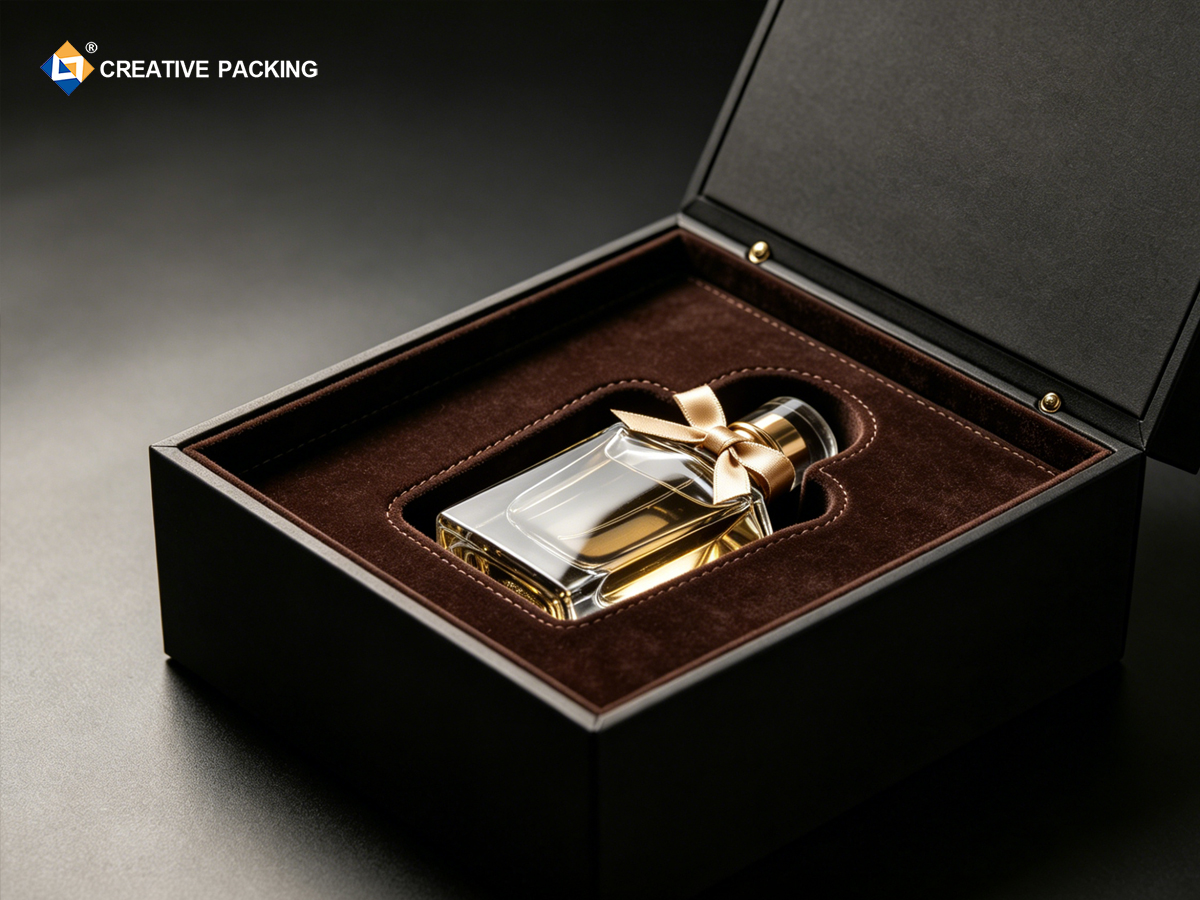
Quick answer: Fragrance is typically 70-95% ethanol, and that alcohol content reaches the box surface more often than buyers expect — during filling-line spills, retail tester handling, or an occasional transit leak. A coating that looks glossy and premium in a dry sample can cloud, peel, or let ink smear the moment it actually contacts alcohol, and "UV coating" or "lamination" on a spec sheet doesn't automatically mean the coating was tested against that specific failure mode.
Most perfume box conversations focus on finish — gloss, matte, soft-touch, foil. Those choices matter for how the box looks on day one. They say very little about how the box holds up the first time it actually meets its own product, which for fragrance packaging is not a hypothetical scenario — it's a routine one.
Why Does Alcohol Contact Matter So Much for a perfume box Specifically?
Because unlike most packaging categories, contact with the product itself is expected, not accidental. Filling lines routinely produce small splashes. Retail testers get sprayed, wiped, and handled by staff and customers dozens of times a day. Even a well-sealed bottle can develop a minor leak during a long international shipment. A perfume box's finish needs to survive this as a matter of course, not as an edge case.
Does "UV Coating" or "Lamination" Automatically Mean Alcohol-Resistant?
No — coating quality varies significantly even within the same general category. A low-grade UV coating or laminate film can cloud, lift at the edges, or let printed ink underneath smear when alcohol sits on the surface for even a short time. This is very different from moisture resistance or scratch resistance, which is what most coating options are actually marketed and tested for. A finish can score well on a scratch test and still fail within minutes of alcohol contact.
How Is Alcohol Resistance Actually Tested?
There's a real, specific method for this, and it's worth asking a supplier whether they test to it rather than accepting a general "yes, it's alcohol-resistant" answer. The standard approach uses a rub test — repeated rubbing cycles with a defined concentration of ethanol under a set weight, checking whether the coating peels or discolors afterward — commonly referenced against ASTM D5264 rub-resistance methodology. A separate but related check is a color-fastness or "crocking" test (referenced against AATCC 8), which rates how much color transfers when the printed surface is rubbed wet and dry. Asking for results against a defined test method, rather than a general claim, is the difference between a coating that's actually been verified and one that's simply been assumed to be fine.
What About Containing a Leak, Not Just Surface Resistance?
Surface coating handles surface contact; it doesn't handle an actual leak reaching the inside of the box. For that, the construction itself needs a plan — a wax or polyethylene inner liner acts as a barrier layer, and a sealed-bottom rigid box construction keeps a leaked bottle from soaking through to whatever the box is sitting on or shipped alongside. These are separate design decisions from the outer coating choice, and a box that handles surface contact well but has no leak-containment strategy is only solving half the problem.
Comparing Finish Options for Alcohol Exposure
| Finish Type |
Typical Alcohol Performance |
Best Suited For |
| Standard gloss lamination |
Variable — quality-dependent, can cloud without specific alcohol-rated treatment |
Lower-contact presentation boxes |
| Soft-touch lamination |
Prone to visible marking from repeated contact unless rated for it |
Boxes with limited handling after retail placement |
| Rub-tested UV coating (specified alcohol-rated) |
Reliable when verified against a defined test standard |
Retail tester packaging, high-handling environments |
| Wax or polyethylene inner liner |
Not a surface finish — addresses leak containment, not cosmetic contact |
Any box where an internal leak risk exists during shipping or storage |
Frequently Asked Questions
Does this matter for a sealed retail box that customers never open before purchase? Less than it does for tester packaging or filling-line handling, but transit leaks can still occur even in sealed units, so a baseline level of resistance is still worth specifying.
Is alcohol-resistant coating significantly more expensive? It's a modest increase over standard coating, generally justified by the cost of reprinting or replacing stock that shows visible surface damage after normal handling.
Can an existing box design be upgraded with alcohol-resistant coating without other changes? Often yes — this is usually a finishing-line specification change rather than a structural redesign, though it's worth re-testing the specific artwork and ink combination rather than assuming a general rating transfers automatically.
Conclusion
A perfume box's coating gets tested by the product itself, not just by handling and shipping — and that's a different requirement than most coating options are actually built for. Creative Packing specifies finish and lining choices for custom perfume boxes based on how the box will actually be handled and where it's likely to contact the fragrance itself, not just how it photographs dry.
Read more:




 Release time:

 WhatsApp: