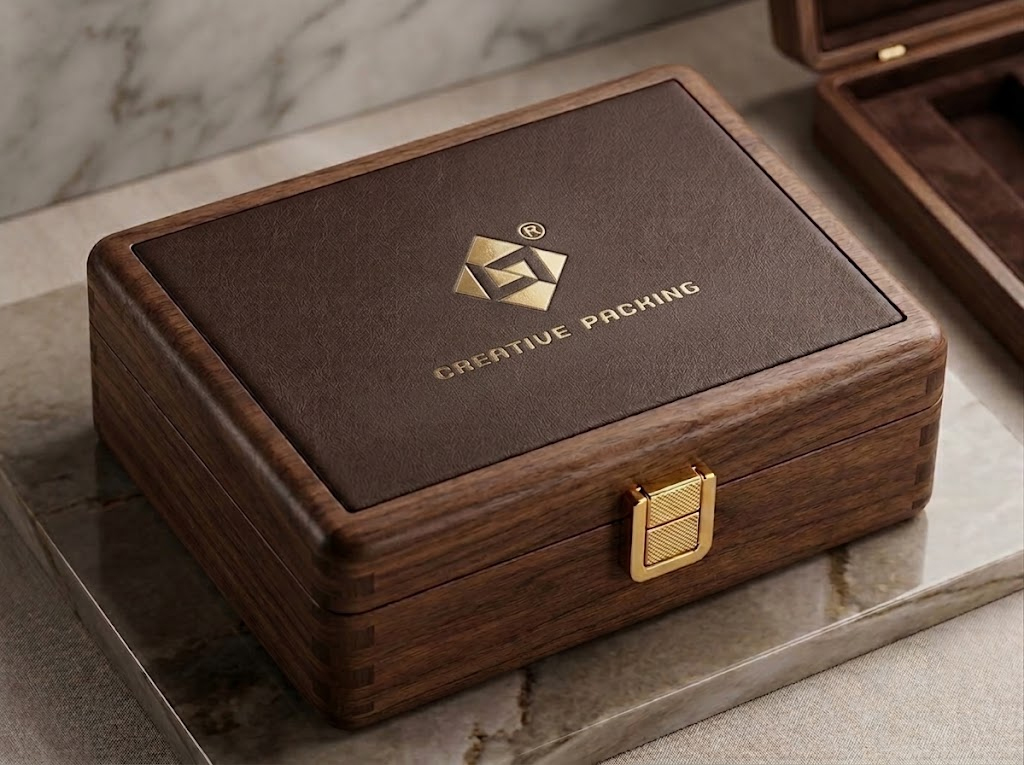
In custom jewelry box projects, many clients notice that even for the same style of box, a change in size can lead to a significant difference in price.
This is not simply because “bigger is more expensive.” Size changes affect material consumption, structural design, packaging efficiency, and shipping costs. Therefore, the dimensions of a jewelry box are one of the key factors determining the final quotation.
1. Larger Size Means More Material Usage
When the size of a jewelry box increases, the most direct impact is higher consumption of materials for the outer box, interior lining, and auxiliary components.
Whether it’s paperboard, fabric, velvet, or inner trays, a larger area naturally increases raw material costs. For complex box shapes, material wastage also tends to rise.
In mass production, even a small increase in material per box can create a noticeable cost difference when multiplied across a large order. This is often the most straightforward reason for price variations.
2. Larger Boxes Require Stronger Structural Design
Bigger jewelry boxes are not necessarily easier to produce. As size increases, challenges related to structural stability, load-bearing capacity, and opening/closing performance become more prominent.
To maintain a flat appearance and solid structure, factories may need to add internal supports, use thicker boards, or optimize the overall design. If the box also includes magnetic closures, drawers, flip-tops, or multi-layer structures, production difficulty increases further. In such cases, the price rise comes not only from materials but also from higher craftsmanship requirements.
3. Size Affects Packaging and Shipping Costs
Once a jewelry box becomes larger, packaging and logistics costs also rise. Larger products occupy more warehouse space and reduce packing efficiency.
For export orders, this can affect container loading quantity and overall transportation expenses. From the factory’s perspective, larger sizes mean fewer finished products per unit of space, resulting in higher per-unit logistics costs. Although these hidden costs may not appear directly in material calculations, they are ultimately reflected in the quotation.
4. Smaller Size Is Not Necessarily Cheaper
Many people assume that smaller jewelry boxes must be cheaper. This is not always the case.
If the size is too small, production precision requirements become higher, and manual handling difficulty increases. Some structures may even require specially customized molds. Additionally, small boxes demand greater accuracy in hardware placement, lining fit, and logo positioning — any slight deviation can affect the overall effect.
As a result, reducing size does not always lead to a proportional decrease in cost.
5. Different Jewelry Types Require Different Sizes
Jewelry box dimensions should not be chosen arbitrarily — they must be designed according to the specific type of jewelry.
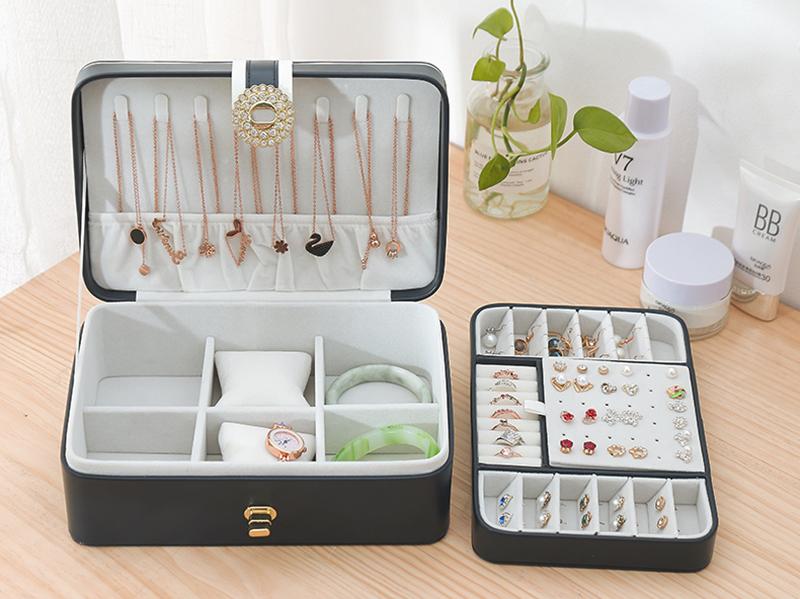
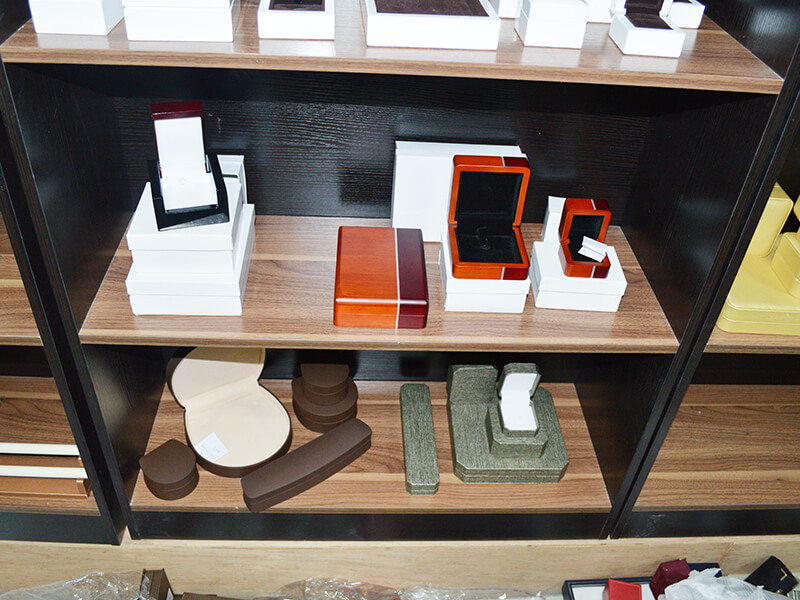
Ring boxes, earring boxes, necklace boxes, bracelet boxes, and set gift boxes all have different requirements for internal space and structure. If the size is not properly matched to the product, jewelry may shift, become compressed, or fail to display well inside the box.
Therefore, it is more reasonable to first determine the jewelry category before finalizing the dimensions. This approach helps control costs while improving user experience and brand image.
6. Confirm Dimensions Clearly When Inquiring
To receive a more accurate quotation for custom jewelry boxes, dimensions should be confirmed early in the inquiry process. It is best to clearly provide the following information:
- Specific dimensions of the jewelry products
- Outer and inner dimensions of the jewelry box
- Whether extra space is needed
- Requirements for custom lining
- Any special structural designs
The more accurate the information, the easier it is for the factory to calculate material usage and production difficulty, and to provide a reasonable quotation.
For custom jewelry boxes, size not only affects appearance but also directly impacts cost.
If you are looking for a reliable custom jewelry box manufacturer, please feel free to share your product dimensions, material requirements, craftsmanship needs, and order quantity. Creative Packing will quickly calculate a quotation and provide suitable customization solutions tailored to your brand positioning.
Read more:




 Release time:

 WhatsApp: